AgriSkill-Agent (A Skill-Guided and Knowledge-Enhanced Agent Framework for Leaf Disease Diagnosis and Management)
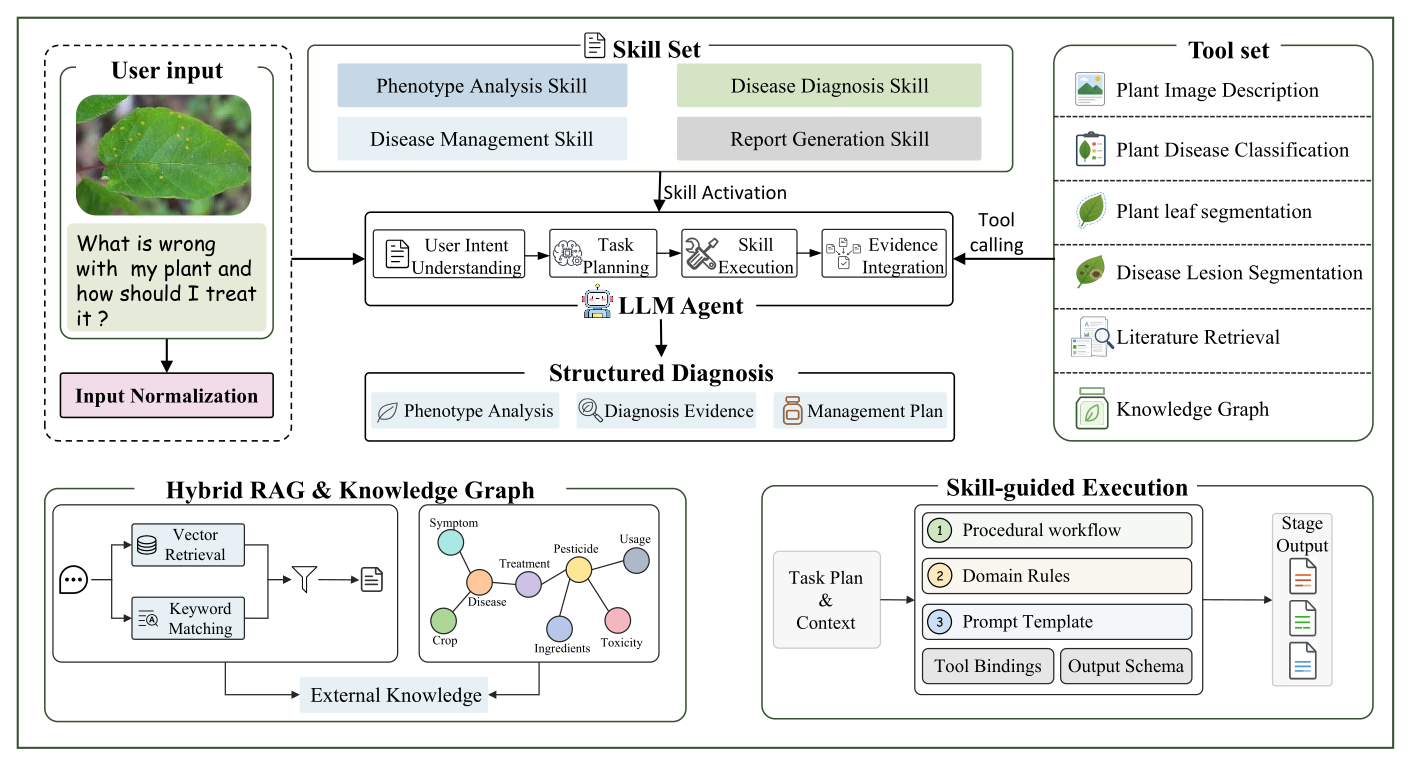
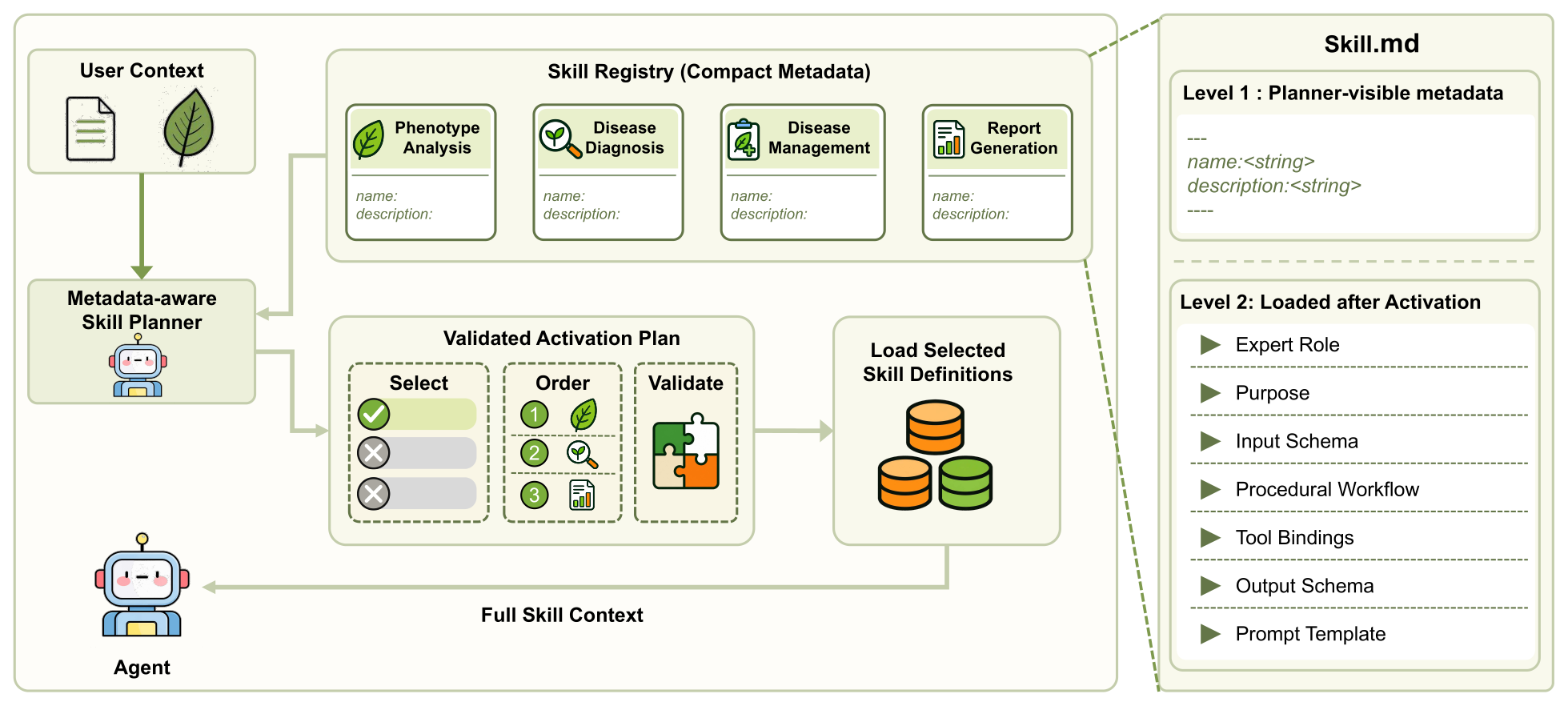
While visual recognition and multimodal language models have improved leaf disease identification, most systems remain focused on recognition rather than integrated diagnosis and management. Practical support must connect symptoms, lesion extent, evidence-grounded diagnosis, and crop-specific guidance. We present AgriSkill-Agent, a skill-guided and knowledge-enhanced single-agent framework for leaf disease diagnosis and management. A central large language model activates task-specific procedural skills to coordinate visual analysis, external knowledge, and structured reporting.
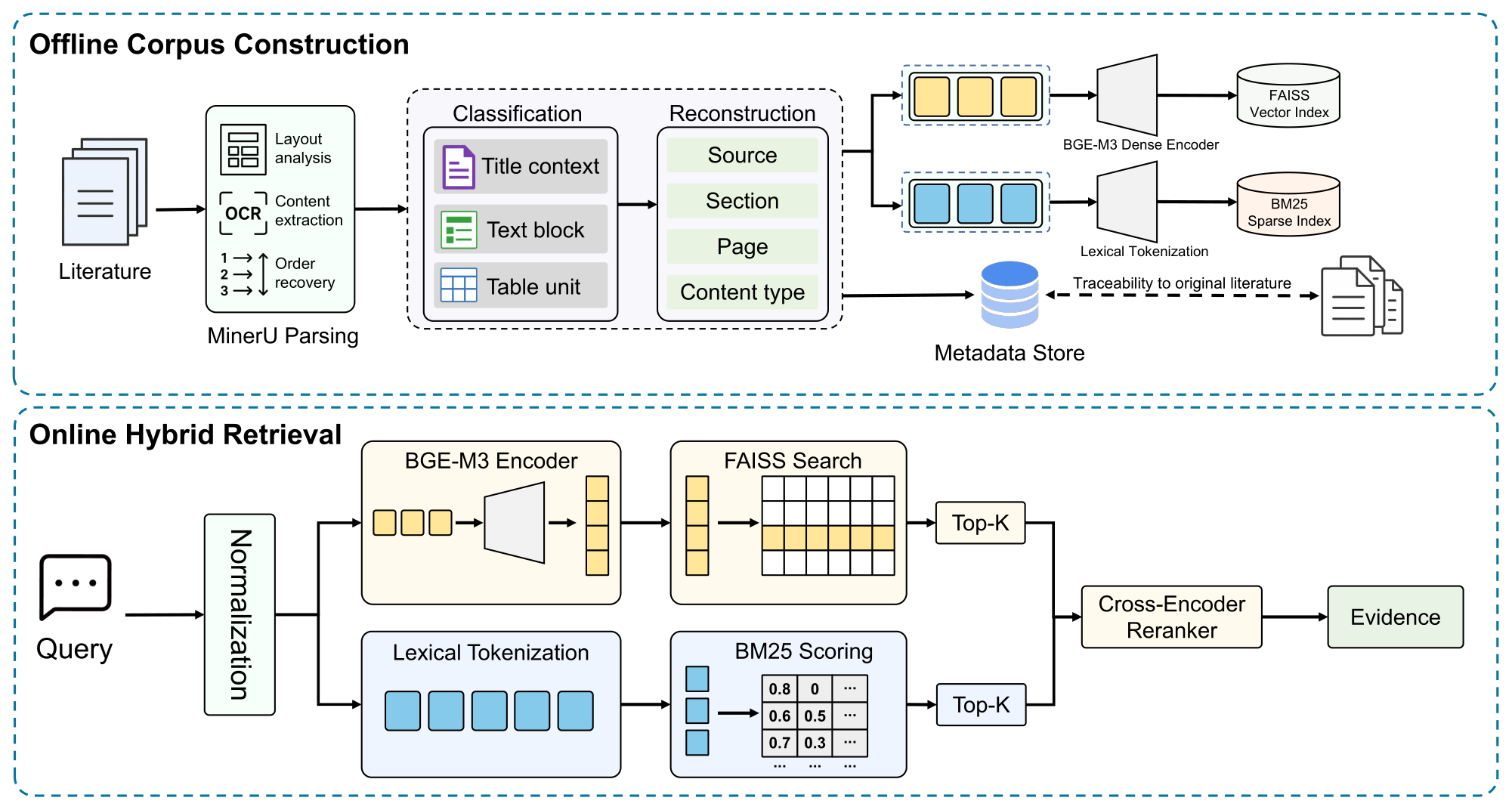
The main contribution is a unified diagnosis-to-management workflow integrating stage-specific skill contracts, deterministic lesion measurement, literature retrieval, and a pesticide-use knowledge graph. Image-derived measurements remain separate from language-model interpretation, while literature and structured pesticide-use knowledge provide traceable support. On 140 image-based cases across 10 crops, AgriSkill-Agent achieved 92.9% diagnosis accuracy and produced more complete and better-grounded reports than direct multimodal baselines.
Contributions.
- We introduce AgriSkill-Agent, a skill-guided single-agent framework that coordinates specialist tools and knowledge sources within a structured diagnosis-to-management workflow.
- We establish an evidence-centered process that separates visual observation, deterministic lesion measurement, and diagnostic interpretation.
- We combine hybrid literature retrieval with a pesticide-use knowledge graph to ground diagnosis and management in contextual evidence and crop-specific safety information.
- Experiments on 140 image cases show higher diagnosis accuracy and report quality than the evaluated direct multimodal baselines.
| October 9, 2026. AgriSkill-Agent project page update. |